
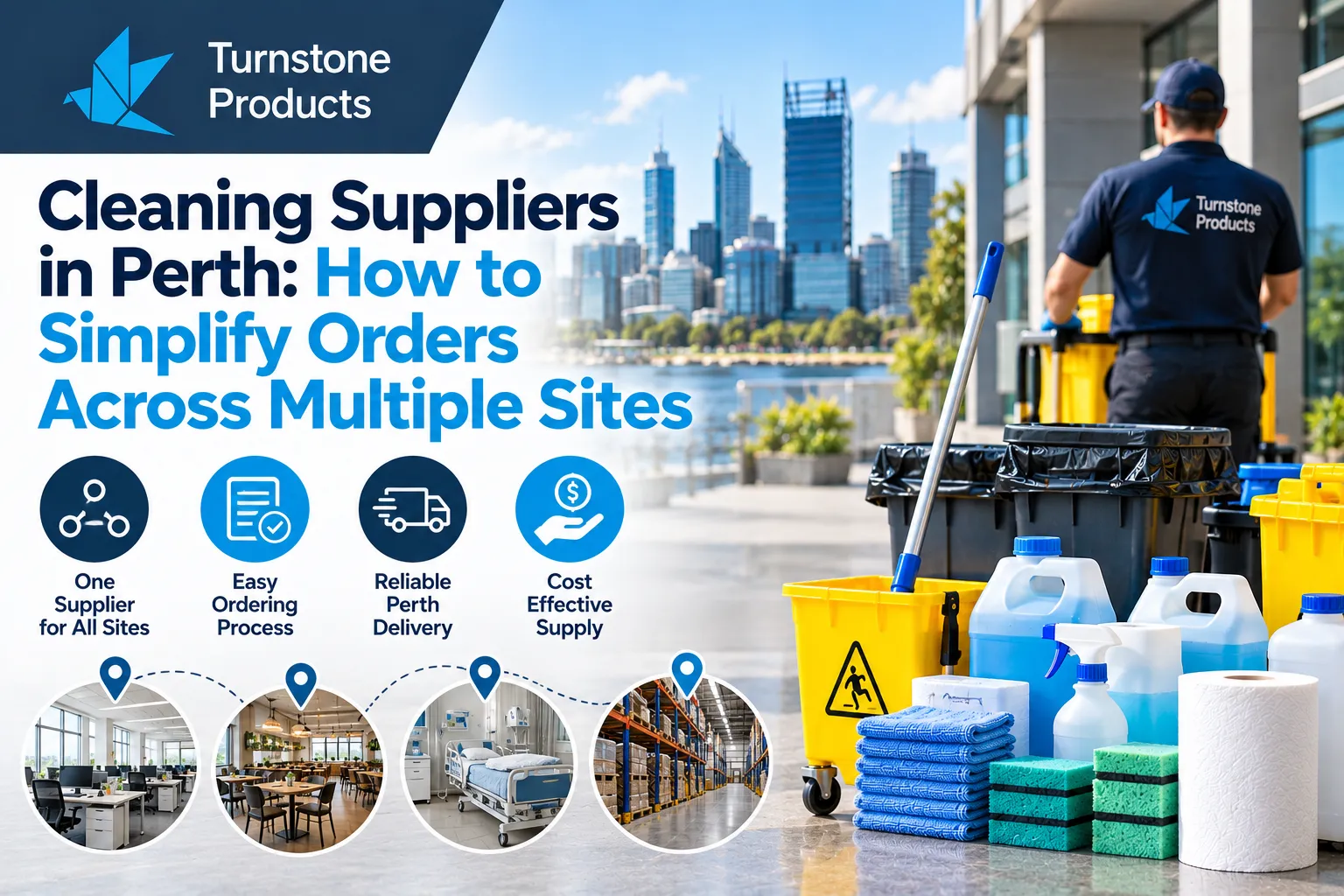
Quick answer: Multi-site businesses in Perth simplify cleaning supply orders by running purchasing through one person or team, using a single approved product list, tracking usage and reorder levels for each site, and buying from one local supplier that delivers to every address. The result is fewer invoices, less duplicate stock and far fewer emergency buys.
Ordering for one office is easy. Ordering for an office in West Perth, a café in Fremantle and a warehouse in Malaga is another matter. Each site has its own manager, its own habits and often its own supplier.
The symptoms are familiar. One location is drowning in hand towels while another has run out. The kitchen has three brands of degreaser. Accounts is chasing invoices from four different companies. The fix is structure, not extra effort: a central process, a standard product list and cleaning suppliers Perth businesses can rely on at every site.
Put One Person in Charge of Purchasing
When every site orders for itself, nobody sees the full picture. Hand the job to one purchasing officer or a small admin team instead.
Sites still decide what they need. They send a request on a set day each week or fortnight, and the purchasing team checks it, combines it with the other sites and places the order. Management can finally see total spend, duplicate orders disappear, and the supplier deals with one contact rather than five.
Central control shouldn’t mean identical orders, though. A commercial kitchen needs food-safe chemicals and heavy-duty liners that a reception area never will.
Build One Approved Product List
A standard list stops sites buying slightly different versions of the same thing, such as a towel that doesn’t fit the dispensers. Record the details that matter:
|
Product |
What to record |
|
Hand towels |
Fold type, sheet size, dispenser model |
|
Toilet rolls |
Roll size, dispenser fit |
|
Bin liners |
Litre size, grade, bin type |
|
Chemicals |
Product name, task, dilution rate |
|
Gloves |
Material and sizes |
Add the supplier’s product code for each line. Codes remove guesswork when a new staff member places an order, and they make it easy to find an approved alternative if an item is unavailable. Standardise wherever sites have similar needs, but never force an unsuitable product on a site just for consistency.
Track Usage and Set Reorder Levels for Each Site
Sites rarely use the same amounts, so identical standing orders leave some short and others overstocked. Start with the cleaning supplies Perth WA sites go through fastest: hand towels, toilet rolls, bin bags, gloves and soap.
|
Site |
Hand towel cartons/month |
Bin liner cartons/month |
|
West Perth office |
8 |
4 |
|
Fremantle café |
10 |
7 |
|
Malaga warehouse |
4 |
6 |
Illustrative figures only.
A few months of records shows what normal looks like. If one office uses twice the hand towels of a similar site, check the dispensers before blaming the staff. Then give each site its own minimum stock level, based on its usage, its storage space and the supplier’s delivery time.
Use One Ordering Routine Everywhere
Phone orders at one site, emails at another and a retail website at a third make records impossible. One simple routine fixes it:
-
Each site checks stock on the same day.
-
The site manager sends a request on the standard form.
-
Purchasing checks it against the product list and places one combined order.
-
Deliveries are checked against the request.
-
Each invoice line is coded to the right site.
That trail shows what was ordered, where it went and what it cost, which makes budgeting and spotting waste far easier.
Choose a Supplier That Can Cover Every Location

The right supplier makes all of this simpler. Look for local stock, delivery to all your addresses, a range broad enough to cover chemicals, paper and liners in one order, and product lines that stay consistent month to month. Ask how orders and invoices can be referenced by site, and plan deliveries around storage: a small CBD office may suit smaller, more frequent drops than a warehouse.
Turnstone Products, a family-owned source of Perth cleaning supplies for more than 20 years, holds stock at its Neerabup warehouse and offers next-day delivery across the metro area, from Yanchep to Mandurah. Its range covers chemicals, bin liners, hand towels, toilet rolls, gloves and dispensers, and businesses contact the team for bulk quotes.
Frequently Asked Questions
Who supplies cleaning products to businesses in Perth?
Most businesses buy from local B2B cleaning suppliers in Perth that sell by the carton and deliver to the workplace, rather than from retail stores. Turnstone Products is a West Australian family-owned supplier based in Neerabup, stocking chemicals, bin liners, paper products, gloves and dispensers, with next-day delivery across Perth metro.
Can one supplier deliver cleaning supplies to several sites?
Yes. Many commercial suppliers deliver to multiple addresses for one business. Before committing, confirm the supplier covers every site, and ask about separate order references and invoicing per location so each site’s costs stay visible.
What cleaning supplies does a business need?
Most workplaces need hand towels, toilet rolls, hand soap, bin liners, disposable gloves, a multipurpose surface cleaner, a disinfectant for washrooms and cleaning cloths. Kitchens add degreaser and food-safe sanitiser, while warehouses usually need heavy-duty liners and floor cleaning products.
How often should a business reorder cleaning supplies?
It depends on usage, storage and delivery times. Busy sites such as cafés often reorder weekly, while small offices may only need fortnightly or monthly orders. Setting a minimum stock level for each product, rather than a fixed date, keeps orders in step with actual use.
Final Thoughts
Running cleaning supplies across several sites gets messy when everyone does their own thing. One purchasing contact, one product list, site-level reorder levels and one reliable local supplier bring it back under control, without lowering hygiene standards anywhere.
