
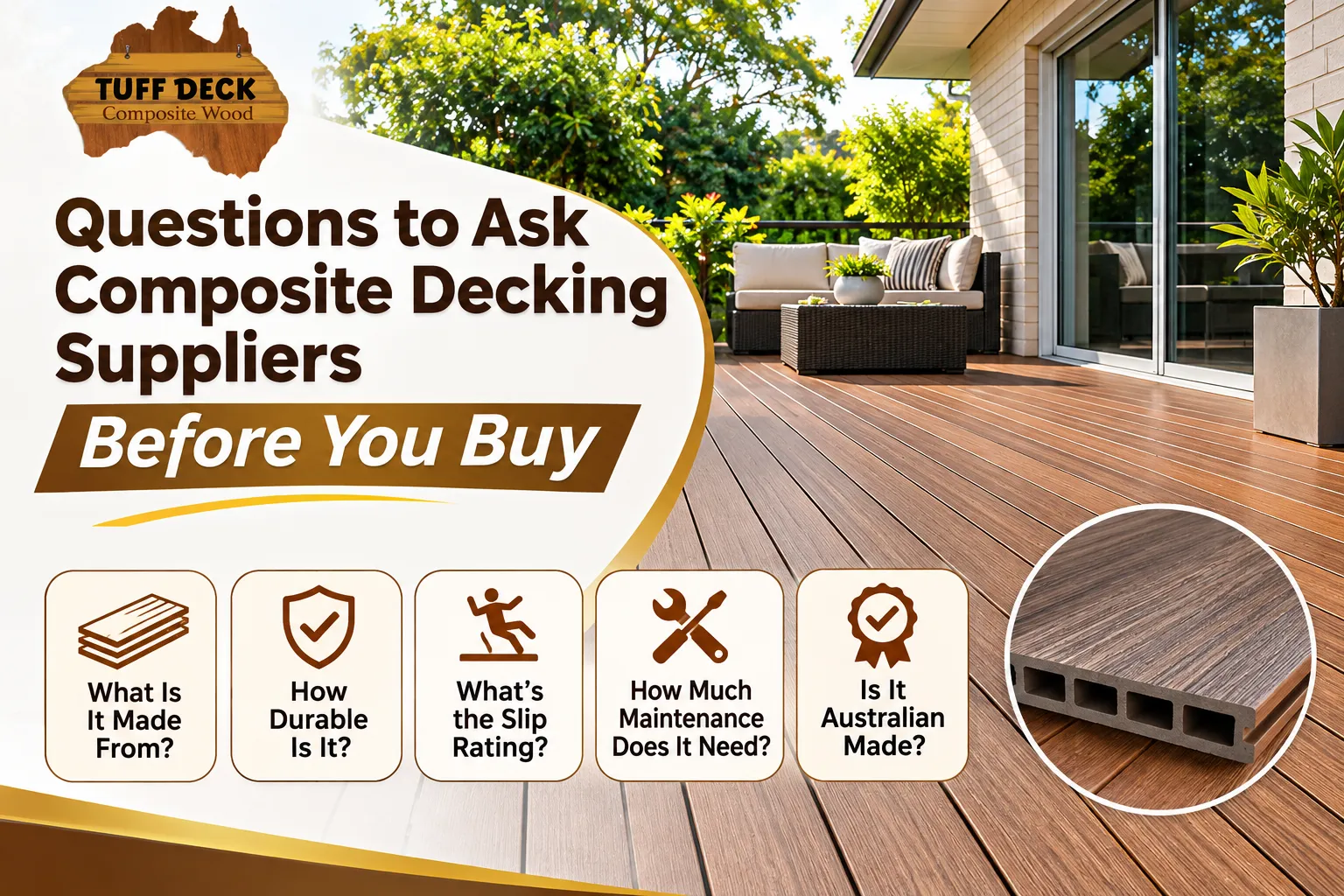
A new deck is one of those projects you only want to do once. The boards you choose matter, but so does the business you buy them from. A good supplier gives straight answers to straight questions. A poor one leans on glossy photos and vague promises.
Composite decking has won over plenty of Australian homeowners because it skips the sanding and oiling that timber demands, and it comes in a wide spread of colours and finishes. Still, two boards that look identical in a brochure can perform very differently after a few Victorian summers.
If you’re looking into composite decking Melbourne has no shortage of options, so it pays to walk in with a short list of questions. Below are the ones we’d put to any supplier before signing off on an order.
1. What Is the Decking Actually Made From?
“Composite” is a broad label. Most wood-plastic composite (WPC) boards blend wood fibre with plastic and a mix of additives, but the ratio, the type of plastic and the way the board is made all vary from brand to brand.
Ask your supplier:
-
Is recycled material used, and how much?
-
Is the board made in Australia or imported?
-
What kind of plastic goes into it?
-
Are UV inhibitors and weather-resistant additives part of the mix?
It’s also worth asking for a product data sheet or test results. A supplier that stands behind its product should be happy to hand those over. What goes into a board shapes how it copes with moisture, sun, heat and foot traffic, and specifications give you something solid to compare. Tuff Deck, for example, makes its boards from reclaimed timber and recycled plastic.
2. Will It Handle Melbourne’s Weather?
Melbourne can serve up four seasons in a single afternoon. Hot, dry spells, cold snaps, heavy rain and big temperature swings all put outdoor surfaces to the test.
Ask how the boards respond to:
-
Long hours of UV exposure
-
Rain and standing moisture
-
Expansion and contraction as temperatures change
-
Mould and mildew in damp corners
Composite holds up better than many timbers, but it isn’t immune to the elements. Some boards settle into a slightly different shade after installation, and most need decent airflow and drainage underneath. An honest supplier will tell you about these limits up front rather than calling the product “weatherproof”.
3. What Size Are the Boards?
Width, thickness and length affect how your deck looks, how many boards you’ll need and how the frame should be built. Confirm all three before you work out quantities, and ask whether custom lengths are available for awkward layouts.
As a reference point, some Tuff Deck boards measure around 145 mm wide, 25 mm thick and 5400 mm long, with custom sizing on offer. Longer boards can mean fewer joins across a big entertaining area, which looks cleaner and cuts down on offcuts.
4. What Does the Warranty Really Cover?
A long warranty sounds reassuring, but the detail lives in the fine print. When you’re comparing composite decking suppliers, ask for the warranty in writing and read it before you pay a deposit.
Questions worth raising:
-
How many years does it run?
-
Does it cover manufacturing defects only, or fading and staining as well?
-
Will installation errors void it?
-
How do you lodge a claim, and who handles it?
Many warranties carry conditions around installation method, environment or cleaning. Knowing them up front protects you later.
5. How Much Upkeep Will It Need?
One of composite’s biggest drawcards is that it doesn’t need painting, staining or oiling. Low maintenance isn’t the same as no maintenance, though.
Ask which cleaning products the supplier recommends, how often the deck should be washed down and what to avoid. It also helps to know how to deal with:
-
Spilled food, wine and barbecue grease
-
Leaves and dirt that build up in corners
-
Scuff marks from outdoor furniture
-
Pool water and splash zones
-
Mould on shaded sections
A regular sweep and an occasional wash, combined with good drainage, will keep most composite decks looking sharp.
6. Can You See a Sample First?
Photos online rarely capture a board’s true colour or texture. Screen settings, lighting and editing can all shift what you see.
Request physical samples and look at them outdoors, in natural light, next to your home’s cladding, paving or brickwork. Run your hand across the surface to get a feel for the grain and grip. Whether you’re torn between grey, brown or a timber-look finish, holding the real thing makes the decision far easier.
7. What Are the Installation Requirements?
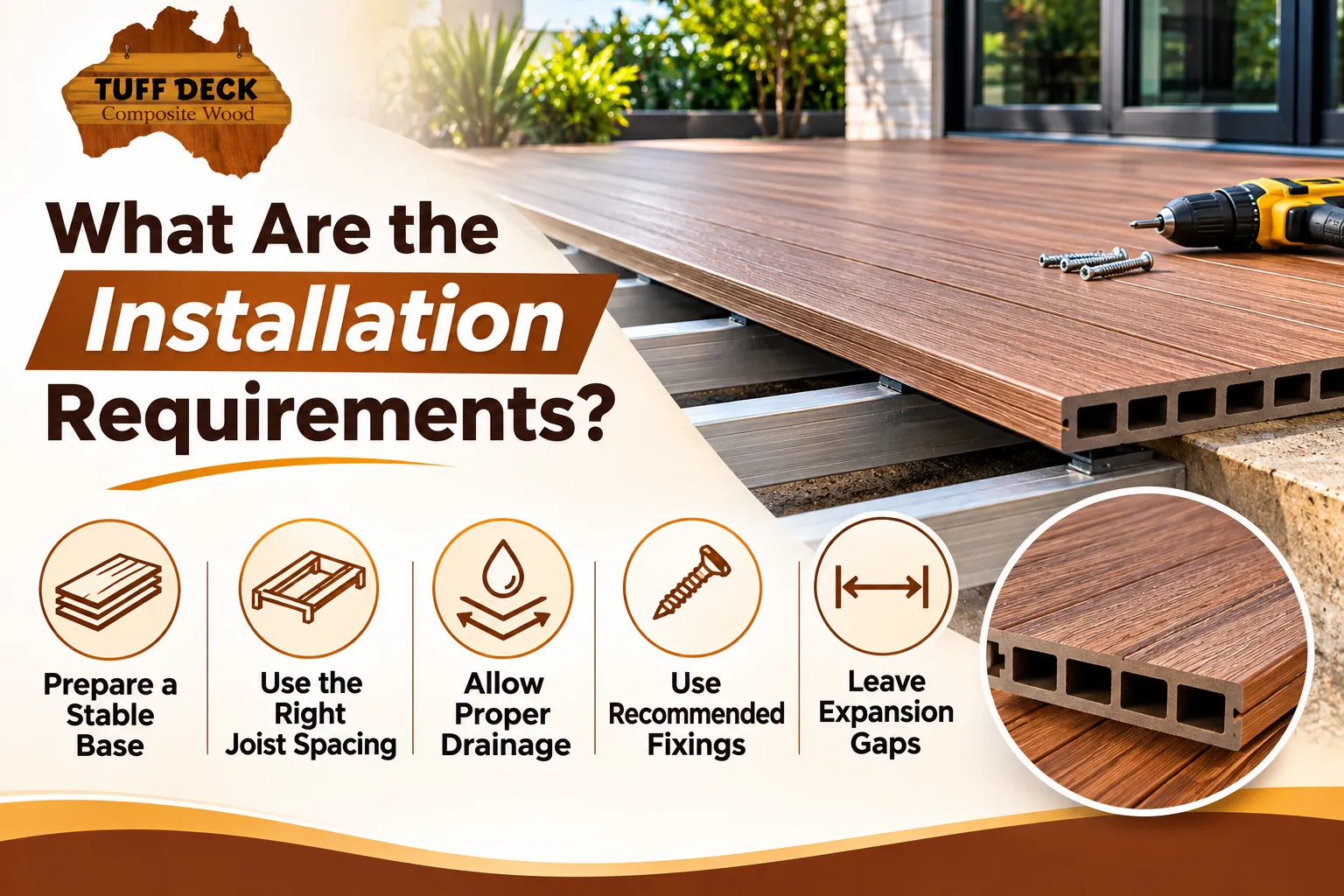
Even the best boards can fail if they’re installed poorly. Incorrect joist spacing, poor ventilation and missing expansion gaps are among the most common causes of trouble.
Check that the supplier provides written guidance on:
-
Joist spacing
-
Expansion and contraction gaps
-
Ventilation beneath the deck
-
Drainage
-
The right clips and fasteners
Low-level decks close to the ground usually need more attention to airflow than raised platforms. Follow the manufacturer’s instructions and local building requirements, and have a qualified installer check the structure if you’re unsure.
8. What’s Included in the Price?
Quotes are hard to compare when one supplier includes everything and another lists boards only. Ask for an itemised quote showing boards, fixings, trims and finishing pieces, delivery and GST.
If installation is part of the deal, confirm whether framing, site preparation and rubbish removal are covered. The lowest number on the page isn’t always the best value once warranty terms, board quality and long-term upkeep are factored in.
9. What Support Do You Get After Delivery?
Good service shouldn’t stop once the truck leaves. When you’re shortlisting decking suppliers Melbourne buyers should look for businesses that can help with installation questions, replacement boards and care advice down the track.
Ask how to get in touch if something goes wrong and how quickly they usually respond. A supplier that’s easy to reach before the sale is far more likely to be there afterwards.
Why Choose Us at Tuff Deck?
We’re a Melbourne-based manufacturer and supplier of wood-plastic composite decking, and we’ve built our range around the very questions above. Here’s what you can expect when you work with us:
-
Made locally in Melbourne: Our boards are manufactured here, so you deal directly with the people who make them.
-
Recycled materials: Every board combines reclaimed timber and recycled plastic, giving waste a second life as a hard-wearing outdoor surface.
-
Custom lengths: We can supply boards sized to suit your project, helping reduce joins and offcuts on larger decks.
-
A choice of colours: From cool greys to warm timber tones, our finishes suit both modern and traditional homes.
-
Clear specifications and guidance: We provide product details and installation information so you, your builder or your installer can plan with confidence.
-
More than boards: Alongside decking, we supply fasteners plus screening and fencing, so your outdoor project can come together from one supplier.
-
Straight answers: Ask us anything on this list. If a product isn’t right for your project, we’ll tell you.
Planning a backyard deck or poolside area? We’re happy to talk through your options and send samples.
Frequently Asked Questions
Is composite decking suitable for Melbourne’s climate?
Quality composite decking copes well with Melbourne’s sun, rain and temperature swings, provided it’s installed with proper ventilation, drainage and expansion gaps. Some minor colour settling in the first few months can be expected.
Does composite decking need oiling or staining?
No. Composite boards don’t need oiling, staining or painting. Regular sweeping and an occasional wash with a recommended cleaner are usually enough.
What should a composite decking quote include?
A complete quote should list boards, fasteners, trims, delivery and GST, plus framing and site preparation if installation is included.
Final Thoughts
Choosing composite decking is about more than picking a colour or chasing the cheapest quote. The right questions reveal how a product is made, how it will behave in your backyard and what support you’ll get once it’s down.
Take your time, ask for everything in writing and compare suppliers side by side. A little homework now means a deck you’ll enjoy for years to come.
