
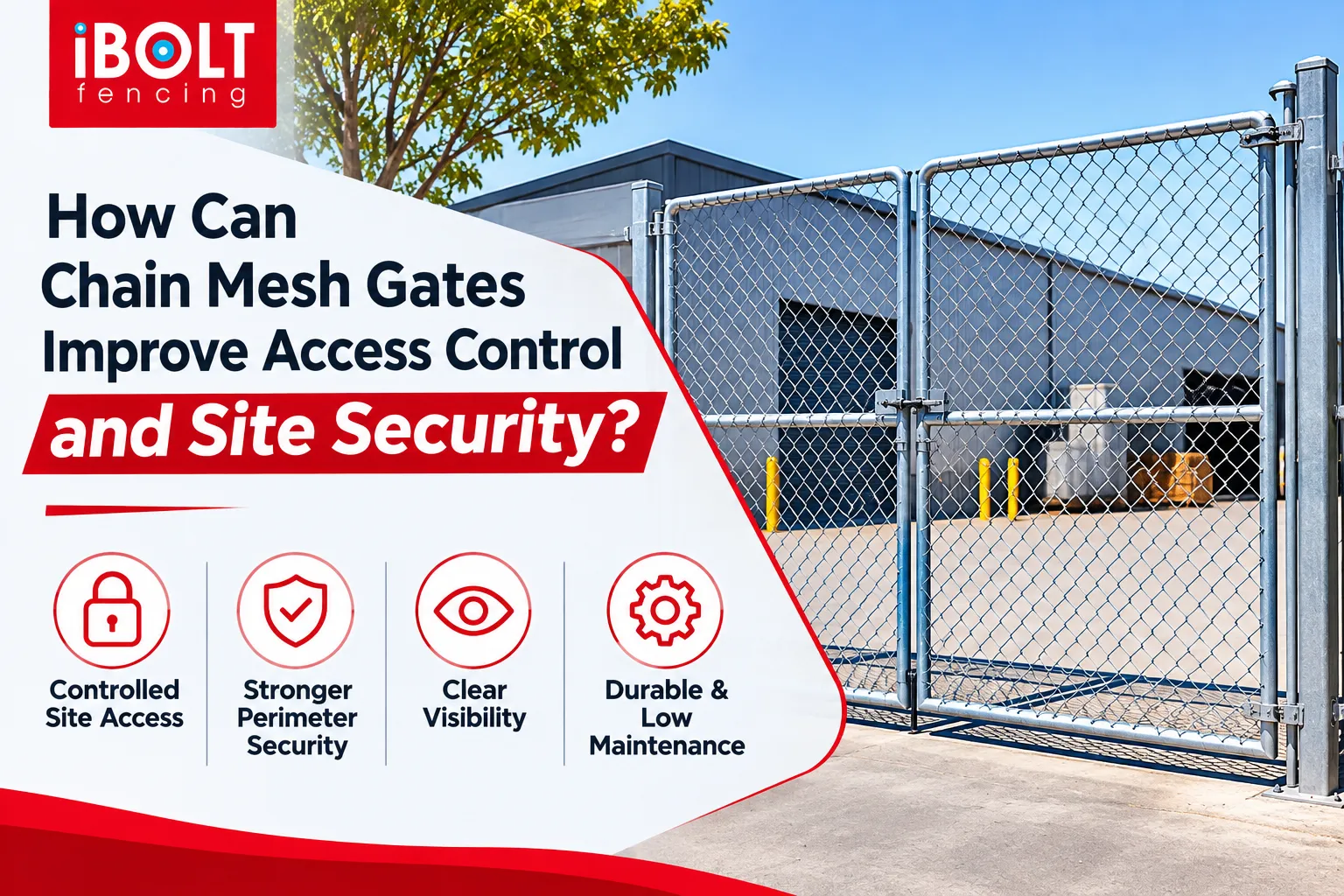
A strong boundary fence is only part of a secure site. Every day, staff, visitors, delivery drivers and contractors pass in and out of a commercial or industrial property, and each of those movements runs through a gate.
If that entry point is weak or poorly planned, it can undo the work of an otherwise solid fence. That’s why the gate deserves as much thought as the fence it sits in.
Chain mesh gates are a practical way to control who comes and goes while keeping clear sightlines and easy access. You’ll find them at warehouses, schools, sports grounds, construction sites and industrial yards.
For businesses looking into chain mesh fencing perth, it helps to understand how the right gates turn a simple boundary into a well-managed, secure perimeter.
What Are Chain Mesh Gates?
Chain mesh gates are made from a steel frame fitted with woven wire mesh. They’re designed to sit within a chain mesh fencing line and provide entry points for people, vehicles and equipment.
Because the mesh is open, you can see straight through the gate while it still acts as a physical barrier. Gates come in several configurations to suit different layouts and operational needs.
Common Types of Chain Mesh Gates
-
Single swing gates – Ideal for pedestrian entries and smaller openings at schools, offices and storage areas.
-
Double swing gates – Two leaves open to create a wider entry for vehicles, maintenance equipment and deliveries, provided there’s enough room for them to swing safely.
-
Sliding gates – These run sideways along the fence line, making them a good fit for industrial sites with limited swing space or busy vehicle entrances.
-
Automated gates – Motorised systems can link with compatible access control equipment to manage authorised entry.
The right choice comes down to traffic flow, available space and how much security the site needs.
How Do Chain Mesh Gates Improve Access Control?
Access control is simply deciding who can enter, when they can enter and where they can go once inside. Chain mesh gates support this by creating clear, defined entry and exit points.
1. Keeping Unauthorised People Out
An open driveway invites anyone to wander or drive onto private property. A properly installed gate puts a physical barrier in the way and discourages casual entry.
Paired with quality locks, sturdy hinges and secure connections to the fence, the gate becomes part of a complete perimeter system. Keep in mind that no gate removes every risk. How well it works depends on its build quality, hardware and whether it’s locked consistently.
2. Controlling Vehicle Movement
Warehouses and industrial sites often see a steady stream of trucks, service vans and staff cars throughout the day. Correctly sized gates help direct that traffic along set routes and keep vehicles out of restricted zones.
Sliding or double swing gates usually suit larger vehicles. When sizing the opening, allow for vehicle width, turning circles and safe clearance on both sides.
3. Separating Pedestrians from Vehicles
Mixing foot traffic with trucks and forklifts creates avoidable risks. Where practical, a dedicated pedestrian gate lets staff and visitors enter without walking through the main vehicle entrance.
This keeps daily movements more organised and supports good workplace traffic management. Make sure pedestrian entries also meet any accessibility and emergency exit requirements that apply to your site.
4. Working with Electronic Access Systems
Many chain mesh gates can be fitted with electronic access control. Depending on the setup, options can include:
-
Keypad entry
-
Swipe card or fob access
-
Remote control operation
-
Intercoms
-
Vehicle access controls
-
Electronic locks
These features reduce reliance on someone manually opening and closing the gate. Automated systems do need the right safety devices, professional installation and regular servicing.
Why Chain Mesh Fencing Matters for Site Security
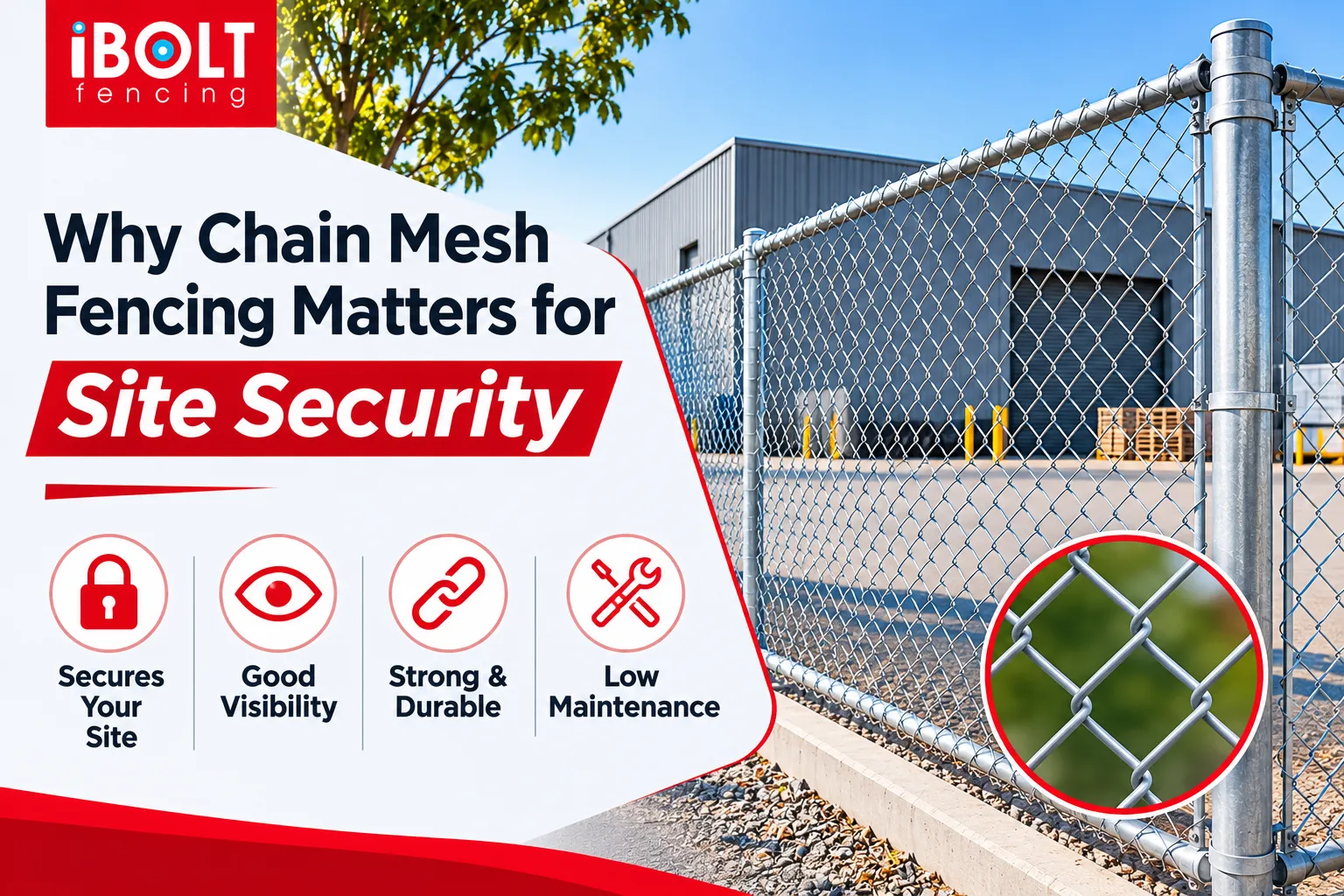
Gates manage the entry points, but the fence defines the whole boundary. Well-designed chain mesh fencing and secure gates work together as one consistent system.
A big advantage of chain mesh is its open weave. Unlike solid fencing, it lets staff and security see what’s happening outside the property, and it can support CCTV coverage where cameras and lighting are well placed.
Other practical benefits include:
-
Clearly marking property lines
-
Separating public areas from restricted zones
-
Keeping entrances visible
-
Adapting to different site layouts
-
Accommodating both pedestrian and vehicle gates
-
Galvanised options for outdoor durability
Wire gauge, mesh size, fence height, posts and fittings should all be chosen to suit how the property will be used.
Where Are Chain Mesh Gates Commonly Used?
Warehouses and Distribution Centres
Warehouses rely on organised access for deliveries, staff and service vehicles. Secure vehicle gates help manage entry to loading yards and storage areas, while separate pedestrian gates keep foot traffic clear of busy driveways.
Schools and Educational Facilities
Schools need controlled entry with good visibility around entrances and outdoor spaces. Chain mesh gates are often used around sports areas, service yards and parts of the perimeter, with hardware and access arrangements chosen with student safety in mind.
Sports Grounds and Recreation Facilities
Sporting venues use chain mesh systems to separate playing fields, manage spectators and protect equipment. Matching gates let players, groundskeepers and authorised visitors reach the areas they need.
Construction and Industrial Sites
Site boundaries keep people away from machinery, equipment and stored materials. Lockable gates make it easier to control access outside working hours.
What to Consider Before Installing Chain Mesh Gates
Choosing a gate involves more than picking an opening width. Even with good materials, a poorly planned installation can cause daily headaches. Before you commit, think about these points.
Size and Opening Direction
The gate must give enough clearance for the people and vehicles using it. Swing gates need clear space to open, while sliding gates need room along the fence line.
Frame and Hardware Strength
Frames, hinges, rollers and locks should match the gate’s size, weight and how often it’s used. A gate opened dozens of times a day needs heavier-duty components than one used occasionally.
Ground Conditions
Uneven ground, poor drainage and weak footings can throw a gate out of alignment. Properly designed posts and foundations keep it running smoothly.
Corrosion Protection
In Perth’s coastal suburbs, salt-laden air can attack exposed metal. The right galvanising, coatings and regular maintenance help protect both gates and fencing.
Security Needs
A simple padlocked gate might suit one property, while another may need automation or advanced access control. The final specification should reflect your site’s risks and the way it operates.
Why Choose iBOLT Fencing for Chain Mesh Gates?
iBOLT Fencing provides commercial and industrial fencing solutions for businesses across Perth and Western Australia.
Our chain mesh services include custom fencing systems with matching swing and sliding gate options. We also offer commercial gate automation solutions for suitable projects.
Whether you manage a warehouse, school, industrial property or other facility, we’ll help you choose a fence and gate combination that balances security, vehicle movement, access needs and long-term maintenance.
Frequently Asked Questions
Are chain mesh gates suitable for commercial properties?
Yes. They’re widely used at warehouses, schools, industrial yards and other commercial sites where controlled access and visibility matter.
Can chain mesh gates be automated?
Yes. Compatible sliding and swing gates can often be automated, as long as the design, safety equipment and installation meet the right requirements.
Are sliding gates better than swing gates?
Neither is better in every case. Sliding gates suit sites with limited opening space, while swing gates work well where there’s plenty of clearance.
Do chain mesh gates need regular maintenance?
Yes. Check hinges, locks, rollers, frames and coatings regularly to keep the gate safe and reliable.
Final Thoughts
Chain mesh gates play a key role in managing access and strengthening security around commercial and industrial properties. By creating set entry points, separating people from vehicles and supporting electronic access control, they make daily operations safer and more organised.
Still, good security depends on the whole installation, including the fence, gate hardware, footings and the way the site is run. For Perth businesses, the right chain mesh fencing and gate system strikes a sensible balance between security, access, visibility and long-term performance.
