
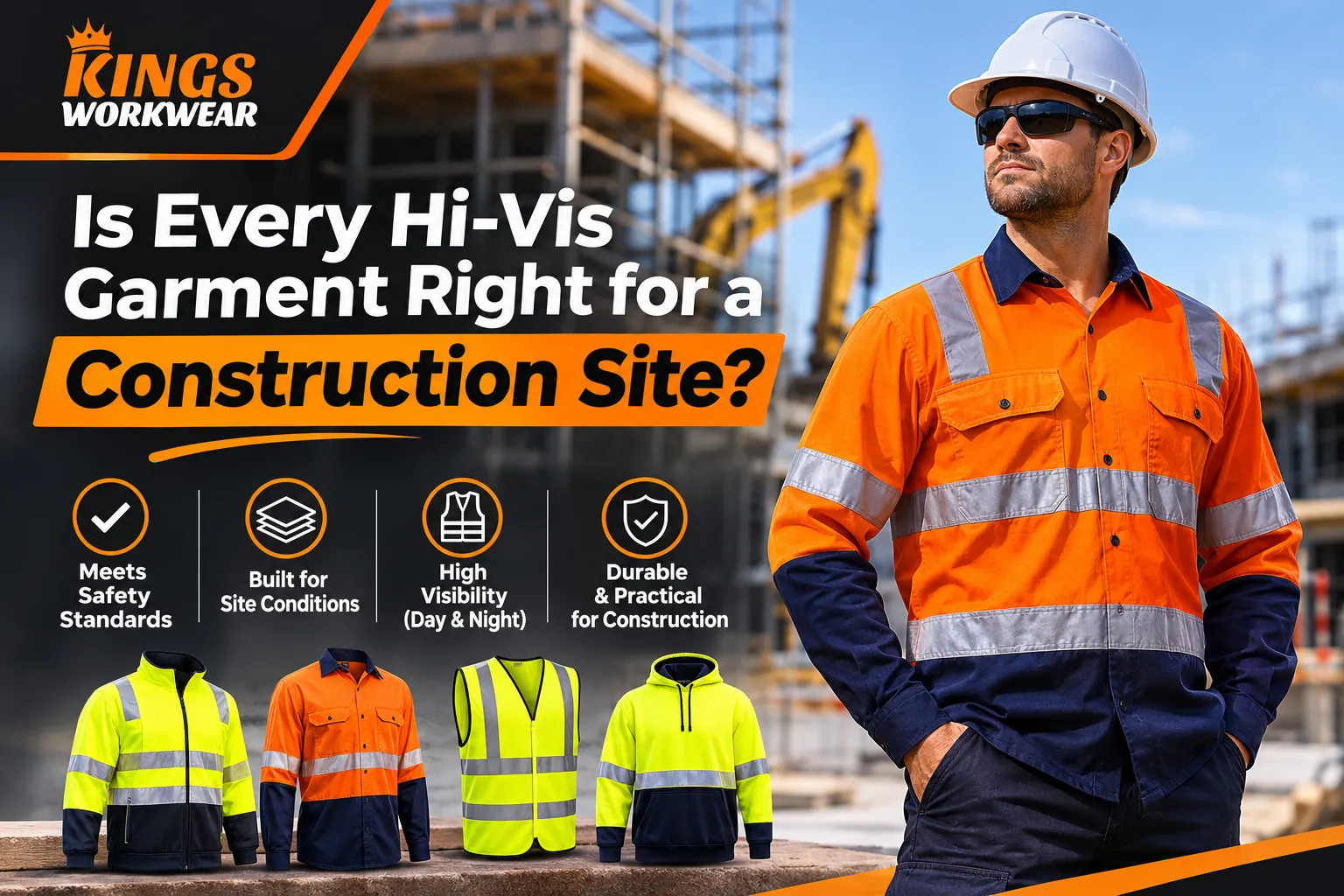
Picture a typical Australian building site at 6 am. The light is flat, a concrete truck is reversing, an excavator is swinging and half a dozen workers are moving between them. In that moment, the only thing separating a near miss from a serious incident might be whether the driver spots you in time.
That’s why hi-vis is part of daily life in construction. But here’s the catch: a shirt being fluoro doesn’t automatically make it suitable for site work. Some garments are built for daylight only, some are made for night work, and some are simply bright clothing with no rating at all.
If you’re buying high visibility clothing for yourself or your crew, this guide explains what actually makes a garment fit for a construction site.
Why Visibility Matters So Much in Construction
Construction sites change by the hour. Plant moves, deliveries arrive, and trucks back in and out of tight spaces. Operators often have limited sightlines, especially in larger machinery.
Hi-vis gear helps workers stand out against busy, cluttered backgrounds like dirt, scaffolding, formwork and shadowed areas. It’s especially important for people working in:
-
Road and civil construction
-
Traffic control
-
Demolition and earthworks
-
Areas with mobile plant and forklifts
-
Loading zones and laydown yards
-
Early starts, late finishes and night shifts
That said, hi-vis is the last line of defence, not the first. Exclusion zones, traffic management plans, spotters and proper training do most of the heavy lifting. Good clothing simply makes sure you’re seen when those controls are tested.
Not All Hi-Vis Is Created Equal
This is the part many people miss. Two shirts can look nearly identical on a shelf and perform very differently on site.
A fluorescent shirt with no reflective tape might do a great job at midday. After dark, under headlights, that same shirt offers far less help, because fluorescent colour relies on daylight to glow. Reflective tape, on the other hand, bounces light back towards its source, which is what makes a worker visible to a driver at night.
So when comparing hi vis work clothes, the question isn’t “is it bright?” It’s “is it rated for the conditions I’ll be working in?”
Understanding Day, Night and Day/Night Ratings
Australian hi-vis garments are generally grouped into three classes:
|
Class |
What It’s Designed For |
|
D (Day) |
Fluorescent fabric for visibility in daylight |
|
N (Night) |
Retroreflective tape for visibility under artificial light, such as headlights |
|
D/N (Day/Night) |
Both fluorescent fabric and reflective tape for around-the-clock conditions |
For many construction workers, D/N is the practical choice, since shifts often start before sunrise or run past dusk. But the right class always comes down to your site’s risk assessment and rules.
The Australian Standards to Look For
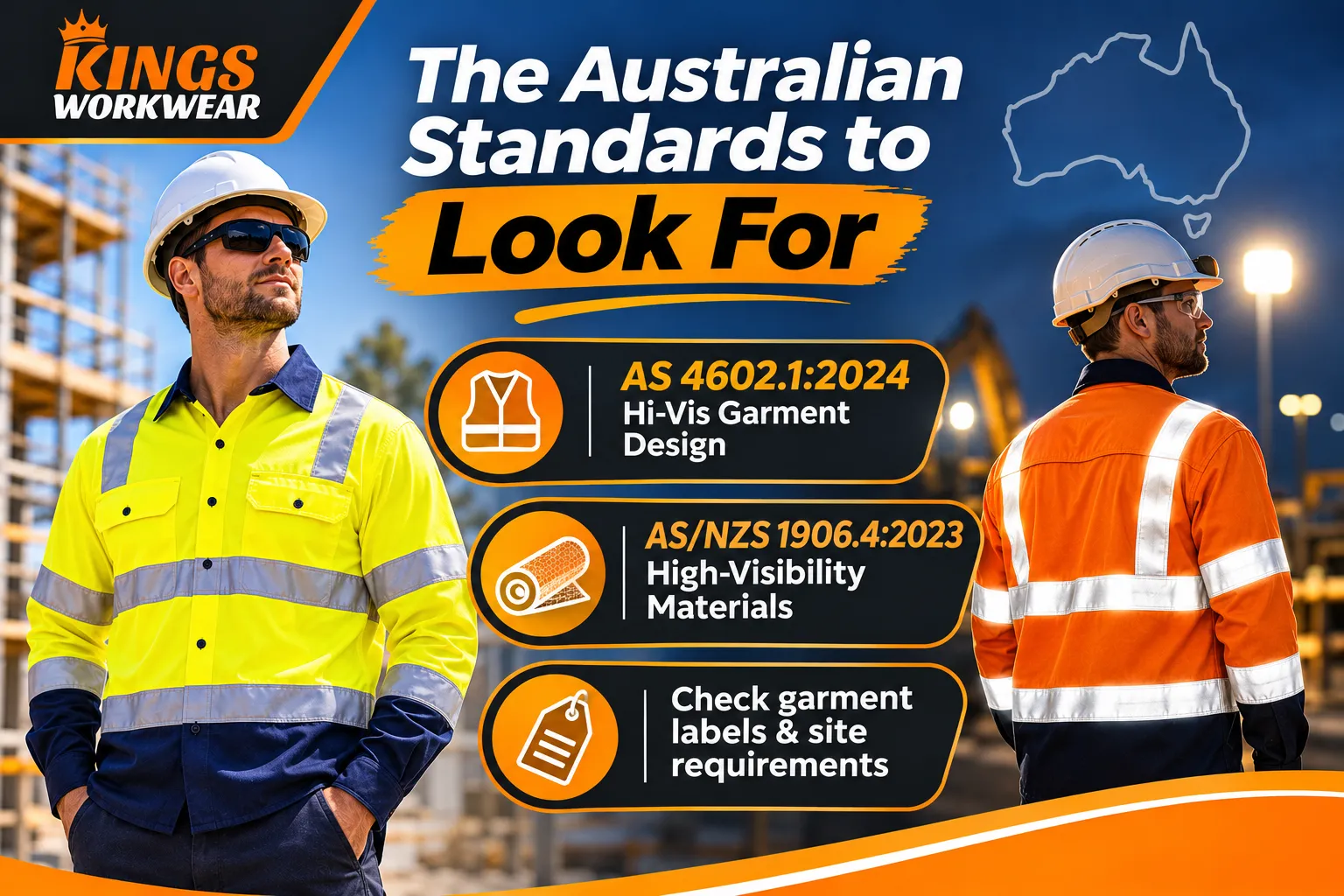
The key standard for hi-vis garments used in high-risk work is AS 4602.1:2024. It covers clothing worn by people who may be exposed to moving traffic, plant or equipment, which describes most construction sites. It replaced the older joint AS/NZS 4602.1:2011.
If you see older stock labelled AS/NZS 4602.1:2011, don’t panic. Some major manufacturers, including KingGee, state that garments marked to the 2011 version remain compliant and align with the 2024 requirements.
The materials themselves, including fluorescent fabrics and reflective tape, are covered by AS/NZS 1906.4:2023.
When you’re shopping, look for:
-
The standard number printed on the garment label or product page
-
The class (D, N or D/N)
-
Clear product information from the manufacturer
If a product is described as “hi-vis” or “safety” but names no standard, ask the seller before buying.
What Else Makes Good Construction Hi-Vis?
Meeting the standard is the starting point. After that, the best garment is the one workers will actually wear properly all day.
Fabric That Suits Australian Conditions
Summer on site can be brutal. Lightweight cotton drill or ventilated polyester shirts help with airflow, and many hi-vis shirts come with UPF sun protection ratings. In winter, layering with hi-vis hoodies, fleece or jackets keeps you warm without hiding your visibility.
A Fit That Moves With You
Construction work means climbing, crouching and reaching overhead. Garments that are too tight restrict movement, while overly loose ones can catch on tools, rebar or machinery. Look for good shoulder room and sleeves that stay put when you lift your arms.
Tough Construction
Reinforced seams, quality zips and durable tape all matter. Reflective tape that cracks or peels after a few washes won’t do its job for long.
Layers That Don’t Cancel Each Other Out
A common mistake is wearing a compliant shirt and then covering it with a standard black jacket on a cold morning. If you need an outer layer, make sure it’s hi-vis as well, with the right rating. Rainwear is the same: choose hi-vis rain jackets and pants rather than plain ones.
Hi-Vis Doesn’t Last Forever
Every wash, every day in the sun and every brush against concrete wears hi-vis down a little. The garment might still feel fine while its visibility has quietly faded.
Check your gear regularly for:
-
Faded or dull fluorescent colour
-
Cracked, peeling or missing reflective tape
-
Stains from paint, grease or concrete over large areas
-
Rips, holes or worn-through patches
Wash hi-vis according to the care label, avoid bleach and fabric softeners unless the label allows them, and replace garments once they no longer look clearly bright or the tape is damaged. Many sites set their own replacement expectations, so check with your supervisor.
Quick Buying Checklist
Before you place an order for construction hi-vis, run through this list:
-
Confirm what your site requires: day, night or day/night.
-
Check the label for AS 4602.1:2024 or the older AS/NZS 4602.1:2011.
-
Pick fabric suited to the season and climate you work in.
-
Choose a fit that allows full movement without excess material.
-
Make sure any jackets, hoodies or rainwear are rated too.
-
Order enough to rotate garments, so each one lasts longer.
Why Choose Us?
At Kings Workwear, hi-vis is one of our core ranges, and we understand what construction crews need from it. Here’s why tradies and businesses across Perth and beyond shop with us:
-
A complete hi-vis range. Our hi vis workwear covers shirts, polos, tees, singlets, vests, hoodies, jackets, rainwear, pants and overalls, all in one place.
-
Brands you already trust. Hard Yakka, KingGee, Bisley, Portwest, Syzmik and more.
-
Gear for every season. Breathable options for summer and hi-vis winter wear for cold early starts.
-
Your logo, done in-house. Our embroidery and DTF printing let you brand hi-vis for your whole crew.
-
Free shipping on orders over $200. Great for stocking up or outfitting a team.
-
Expert help in-store. Visit our Southern River shop in Perth or call our team for advice on sizing and ratings.
If you’re unsure which hi-vis suits your site, get in touch. We’ll help you find the right gear.
Frequently Asked Questions
Can I wear a plain fluoro shirt on a construction site?
Only if it meets your site’s requirements. Bright colour alone doesn’t prove a garment meets AS 4602.1:2024.
Do I need reflective tape for daytime work?
Not always. Class D garments don’t require tape, but many sites ask for day/night gear because conditions change throughout a shift.
How often should hi-vis be replaced?
There’s no fixed timeframe. Replace garments when the colour has faded, the tape is damaged or the fabric is worn.
Final Thoughts
On a construction site, being seen isn’t optional. The right hi-vis isn’t just the brightest one on the rack. It’s a garment rated for your conditions, built for your work and kept in good condition.
Check the class, confirm the standard, choose comfort you can work in all day, and replace gear before it fades. Those simple steps go a long way towards keeping you visible and safe.
